Bachelor of Arts in Accounting


Program Overview & Goals
Business leaders rely on accurate numbers to make critical decisions every day. Accountants provide the financial data to guide those choices.
When to hire, how much to spend on research and development, where to allocate capital, which strategies to choose to reduce tax burden: Organizations constantly face these fundamental questions. Accountants are on the front lines of ensuring businesses are equipped to be successful in navigating these challenges.
In the Bachelor of Arts (B.A.) in Accounting degree program at Hendrix College, you go beyond spreadsheets and learn how to analyze financial data, understand how organizations operate, and identify opportunities to put money to work. It is a degree that prepares you for CPA licensure, as well as careers in finance, auditing, tax, and beyond, playing a key role in supporting decision-makers with trusted information.

Via Hendrix
Accountants ask: What happens to the bottom line when organizations choose one path over another? You take the same approach to your future Via Hendrix. You start by asking fundamental questions about what motivates you and where you want to go, and then receive personal guidance from advisors and mentors to get there.
An Accounting major gives you the technical expertise every employer demands, but at Hendrix, you do not stop there. Our liberal arts foundation layers in the communication, critical thinking, and collaborative skills that turn competent accountants into confident leaders and problem-solvers. That combination prepares you for a meaningful future and a solid career in accounting in any industry.
Careers & Outcomes
Accountants are analysts, problem-solvers, and strategic thinkers, as reliant on creativity as they are on logic. By blending the liberal arts with a professional focus, you build the quantitative and critical thinking skills employers value.
Salary Projections
According to the U.S. Bureau of Labor Statistics, the median pay for accountants is $81,680.
Top Industries
- Accounting Firms
- Banking and Financial Services
- Consulting
- Government and Public Sector
Career Options
An Accounting degree prepares you for a wide range of jobs that involve tracking income and expenses or developing strategies to put money to work. Career options for Accounting majors include fields such as:
- Auditor
- Financial Analyst
- Staff Accountant
- Tax Analyst
Co-op Opportunities
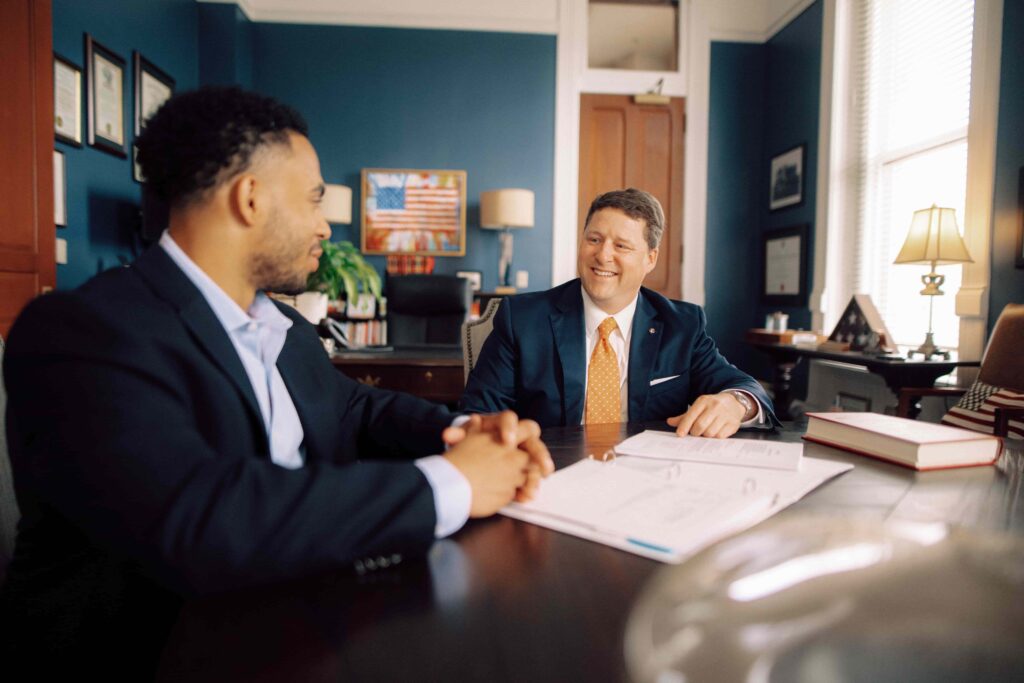
Our co-op program is a semester-long, full-time placement that takes you out of the classroom and delivers real-world experience. Co-op for Accounting students may include working in places including:
- Acxiom
- Ernst & Young
- Simmons Bank
Roadmap to the B.A. in Accounting Program
In addition to required classes in accounting, economics, and finance, your path to a degree includes the latitude to explore other interests, work collaboratively with your classmates, and deepen your knowledge through pivotal hands-on learning experiences.
Year One
The First Year Experience starts by asking: What is important to you? Where do you want to go? Then we build a plan to get there before you even take your first accounting class.
Year Two
In your second year, you will have a stronger vision of what your academic experience and career planning look like. Your integrated advising team of faculty, career counselors, and mentors will ensure that the things you study align with your future goals while still providing room to explore.
Year Three
Put your knowledge to work through the co-op program. This full-time, semester-long experience builds confidence, strengthens your resume, and shows employers you have what it takes to thrive. We will even help arrange your placement.
Year Four
The program culminates in your Senior Experience. This allows you to reflect on what you have learned about both accounting and life and then think about how you could put that to use wherever you go next. You can complete a Corporate Strategies Capstone, an integrative course where you can apply your knowledge to real-world business decision-making.
Featured Classes
As part of the Department of Economics and Business, the Accounting program gives you a comprehensive look at how organizations operate, make decisions, and grow.
BUSI 200
Principles of Accounting
Start with the basics in this class, one of the first you take in the accounting major. This course covers GAAP, or generally accepted accounting principles—a term you will encounter consistently as you learn to accumulate, measure, and interpret financial data.
ECON 210
Macroeconomic Theory
Get a big-picture understanding of topics including inflation, unemployment, and economic growth, while learning how monetary and fiscal policy help governments achieve macroeconomic objectives.
BUSI 370
Auditing
Financial statements are only as good as they are accurate. Learn how auditors work in a class that covers professional ethics, auditing standards, reports, internal control, and the selection, scope, and application of auditing procedures.
BUSI 330
Managerial Accounting
Study the accounting systems and tools used for product costing, organizational planning, control, and management decision-making.
Master of Arts in Accounting
Meet the Faculty
The full-time faculty in the Department of Economics and Business includes three CPAs, reflecting their expertise and close connection to the trends and evolving regulations in the accounting profession. But they’re not just experts. They are also skilled teachers who are deeply committed to your success and helping you find the path that is right for you.

Gina Bergfeld
Associate Professor of Economics and Business
Chair, Department of Economics and Business
Chair, Master of Arts in Accounting Program
Keith Berry
Professor of Economics and Business
Steve Crenshaw
Assistant Professor of Economics and Business

Lyle Rupert, PhD, CPA
C. Louis and Charlotte Cabe Distinguished Professor of Economics and Business
Related Programs
Get a 360–degree perspective of all aspects of running a business, study the factors that shape the economy, or even design your own major in one of over 30 majors.



Take the Next Step
A B.A. in Accounting from Hendrix College is more than a ticket to an in-demand career. It also delivers experience, confidence, and purpose—assets you can draw on wherever your career takes you.