Alumni Spotlights
Real Hendrix Experiences

Building Civic Leaders for Arkansas and Beyond
Jim Gray ’80
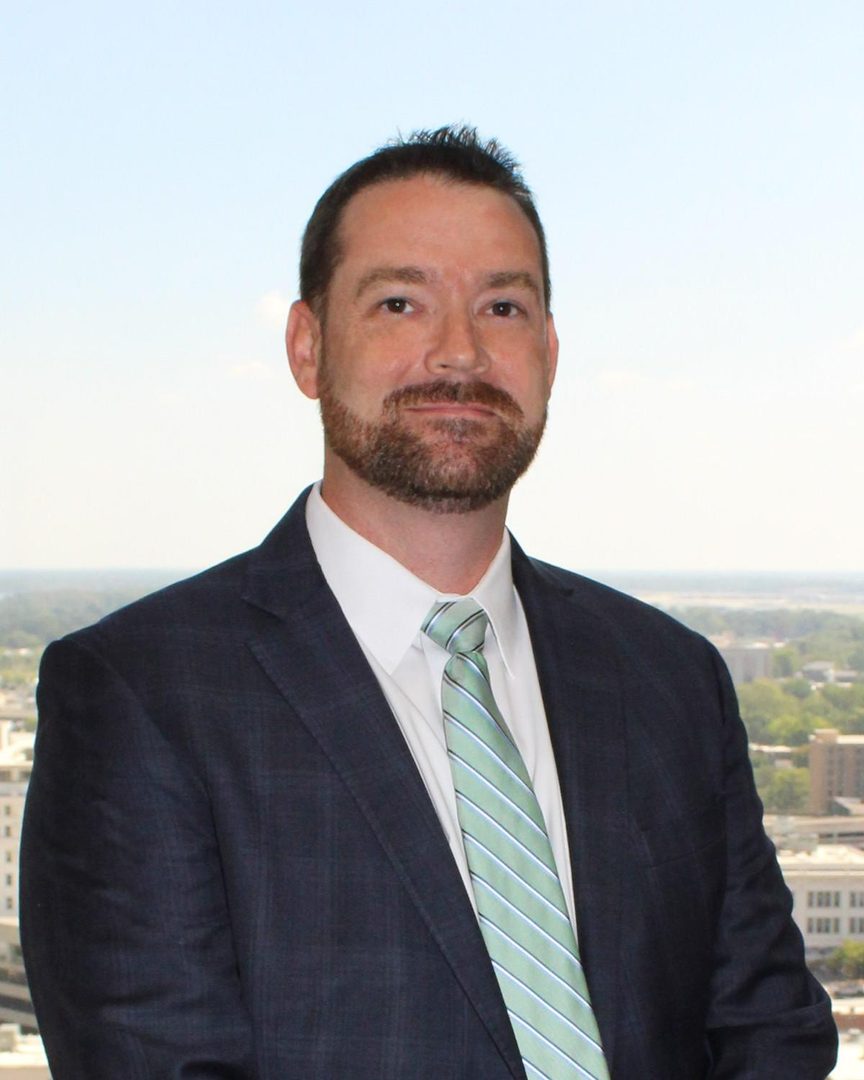
Reflecting on Community, Career, and the Hendrix Experience
Brad Moore ’06
Jim Gray ’80
Building Civic Leaders for Arkansas and Beyond
Few alumni have invested as much time and energy in the future of Hendrix students as Jim Gray ’80. His vision and support, inspired by his late mother, Susan East May, helped make the Center for Civic Leadership in Arkansas (CCL) possible. Today, CCL is helping students develop the skills, experiences, and connections needed to become engaged citizens and leaders in their communities.
Jim’s path to Hendrix was not a conventional one. “I was disengaged in high school and fortunate to find my way to Hendrix,” he reflects. “A mentor and Hendrix alumna, Nancy Wood, encouraged me to attend, and it changed the trajectory of my life.”
While academics played an important role, Jim credits the relationships he built outside the classroom as the most meaningful part of his college experience. “My most treasured memories are the friendships I formed. Whether it was campus events, spring break trips, or late-night conversations in the residence halls, those relationships have become some of the most important in my life.”
As a student, Jim envisioned a future in law. Hendrix helped prepare him for admission to Vanderbilt Law School, where he discovered new interests that would ultimately guide his professional journey.
A Hendrix classmate helped him secure a position in Washington, D.C., during the banking crisis of the 1980s, sparking an interest in affordable housing policy. Over time, Jim transitioned from practicing law to shaping housing policy in government and nonprofit organizations.
Opportunities along the way, including support from a Ford Foundation grant, led to leadership roles where he helped influence affordable housing initiatives nationwide. Most recently, he concluded his professional career at the Lincoln Institute of Land Policy and has since launched a volunteer initiative focused on strengthening affordable housing capacity across Arkansas.
The idea for the CCL grew out of Jim’s experiences mentoring students in Washington, D.C. For years, he hosted talented summer interns from Rice University and wondered why more Hendrix students weren’t pursuing similar opportunities. Conversations with former Hendrix faculty member Dr. Jay Barth ’87 helped him better understand the resource challenges facing smaller institutions.
Initially, Jim imagined creating a program that would bring Hendrix students to Washington. But his mother, Susan East May, offered a different perspective: “We don’t need a program to take more bright students away. We need a program that encourages civic leadership in Arkansas.” Her insight helped shape the vision for the Center for Civic Leadership.
Modeled in part after the cohort-based approach of Hendrix’s Murphy Scholars Program, the CCL was designed to foster civic engagement among Hendrix students, regardless of their intended career paths. “Our goal is for civic leadership to become a meaningful part of every student’s Hendrix experience,” Jim said.
Jim believes civic leadership has never been more important. “The deterioration of civic discourse, the coarsening of rhetoric, and the challenges we see in public life today all point to a need for renewed investment in healthy civic participation.”
Through leadership development, community engagement, and student-led projects, the CCL encourages students to become thoughtful problem-solvers and active contributors to their communities.
For Jim, one of the most rewarding aspects of the CCL’s growth has been watching students turn ideas into action.
He is quick to credit Dr. Delphia Shanks, director of the Center for Civic Leadership and chair of the Hendrix Department of Politics, whose leadership has been instrumental to the program’s success. “Delphia has done a remarkable job bringing together student training, project funding, faculty engagement, and other program elements to help students succeed.”
Early CCL projects included student research on faith-based prison reentry programs and comparative studies of police departments in Washington, D.C., New Orleans, and Little Rock, including field observations and ride-alongs.
When asked what qualities matter most in today’s leaders, Jim points to the importance of personal connection. “As our world becomes more digital and artificial, genuine human connection and understanding become even more important.” He believes the ability to listen, engage thoughtfully, and collaborate across differences will help define effective leadership for future generations.
Jim encourages students to make the most of both their academic and experiential opportunities. “Use your breaks and summers to explore the kinds of work you think you might want to do. The more experiences you have, the more informed your decisions will be after graduation.”
He also emphasizes the importance of engaging fully in campus life. “Spend as much time as possible learning from the many opportunities Hendrix provides to interact with others. Some of your most important lessons will come from those experiences, not just from the classroom.”
Jim remains optimistic about the opportunities ahead for Hendrix students. “I believe the combination of a strong liberal arts education and Via Hendrix will prepare students exceptionally well for today’s competitive job market.”
For Jim Gray, Hendrix remains a place where relationships, leadership, and service come together to transform lives. Through the Center for Civic Leadership, that legacy continues to shape the next generation of changemakers.
Brad Moore ’06
From the Bridge to the Courtroom: Brad Moore Reflects on Community, Career, and the Hendrix Experience
As a successful attorney with Mitchell Williams in Little Rock, Brad Moore has built a distinguished legal career. Yet when he reflects on his journey, it all begins with a childhood memory of Hendrix College.
For Brad, the path to Hendrix began long before he ever submitted an application.
“As a kid, probably nine or ten years old, I remember driving through Conway with my mom and seeing the catwalk over the street. I said, ‘That’s where I want to go to school.’ I had no idea what the school was called. I just knew I wanted to walk across that bridge.
“My mom responded and said, as she has many times throughout my life, ‘work hard, do your best, and good things will happen. If that is where you want to go, you can make it happen.’ At the time, I had no idea that her words of wisdom and encouragement would help lead me to where I am today.”
When it came time to choose a college, Brad explored several options, including Rhodes, UCA, and Centenary, but Hendrix stood apart. “It just felt like home. I don’t know what it was. There was just something pulling me toward it.”
Brad majored in Accounting and minored in International Business. While at Hendrix, he began considering law school after hearing fellow alumnus Derrick Smith ’97, now Managing Partner at Mitchell Williams, speak on campus.
“I remember thinking, ‘That’s a cool guy. I want to learn more about law school.’”
Encouragement from his future mother-in-law, a well-respected bankruptcy attorney at the time and now Chief Judge of the United States Bankruptcy Court in Arkansas, reinforced the idea. Brad went on to attend law school and quickly realized he had found the right path.
“After my first semester of law school, I knew it was a great decision.”
Not only did Hendrix launch Brad’s career, it also introduced him to his future wife, Michelle ’06.
Their story began on her first night on campus.
“They had us gathered in front of the library in a big circle holding hands. She happened to be standing next to me, and that was our introduction. I’ll never forget my first words to her, ‘If you’re going to hold my hand, you have to at least tell me your name.’ We hit it off from the start and have been going strong ever since.”
After some persistence on Brad’s part, a friendship turned into a lifelong partnership. Today, Brad and Michelle are raising two sons, ages 14 and 9. “It’s very chaotic,” he laughs, “but in the best way.”
Transitioning from Russellville Public Schools to the rigorous academic environment at Hendrix was challenging.
“It was tough going in. I never really felt challenged, academically, until I started taking classes at Hendrix. Through high school, I never had to study much. I would look over notes the night before a test, sometimes the day of the test, but Hendrix was on another level.”
Brad credits several faculty members such as Dr. Karen Oxner, Professor Lyle Rupert ’82, the late Dr. Ralph Scott ’73, and the late Dr. Stephen Kerr ’76 for helping him adjust and succeed.
One moment stands out in particular. “At the end of that first semester, I got my grades and said, ‘Okay, I can do this. I can hang here.’”
The support of professors, coaches and classmates alike made all the difference.
“The Hendrix community helped me get to where I am today. The open-door policy of my professors and their willingness to help guide me through the rigorous academic courses really helped me develop a stronger work ethic. My soccer coaches, Glen Tourville and Tom Noor, helped me become more responsible and proactive in managing my time that was a great supplement to the guidance provided by my professors. I could not have succeeded without the nightly study groups with my classmates who were always willing to help me.”
Brad recently returned to campus for his 20th class reunion and was amazed by the transformation. “It’s hard to believe it’s been twenty years. The campus has changed so much.”
While he enjoyed seeing additions such as new facilities and campus improvements, he joked about one particular change. “They built over my old soccer field.”
When asked what area of Hendrix he would most like to support, Brad focused on the value of mentorship and real-world connections. “I think students would benefit from hearing from professionals in the community who can tell them, ‘You’re here for a reason. You can do this.’”
He believes students gain confidence when they can see examples of where a Hendrix education can lead. “It gives them a preview of where the road is going and what they can become. It shows them that hard work and determination will provide great rewards.”
When challenged to sum up Hendrix in a single word, Brad’s answer came quickly: Community
“It’s such a small, tight-knit community. You’re friends with people from all walks of life. I will always remember Mimi Courtway, the first person that greeted us when entering the cafeteria, and the love she showed to each and every person that walked through the door.”
He credits Hendrix with broadening his perspective and teaching one of his most important life lessons. “Just because you don’t have the same beliefs as someone else doesn’t mean they’re a bad person or you’re a bad person. You can still get along and disagree. Hendrix opened my eyes to the world and made me a better person for it.”
From a young boy captivated by a campus bridge to a respected attorney and community leader, Brad Moore’s story reflects the enduring power of a Hendrix education. His experiences underscore what many alumni describe as the defining characteristic of Hendrix: a community that challenges, supports, and prepares students to make a meaningful impact long after graduation.
Class Year: 2006
Major: Accounting
Minor: International Business
Career: Attorney, Mitchell Williams
Favorite Hendrix Word: Community